email
glass.machines@aliyun.comCALL US
+86-185 3880 9758
CALL US
+86-185 3880 9758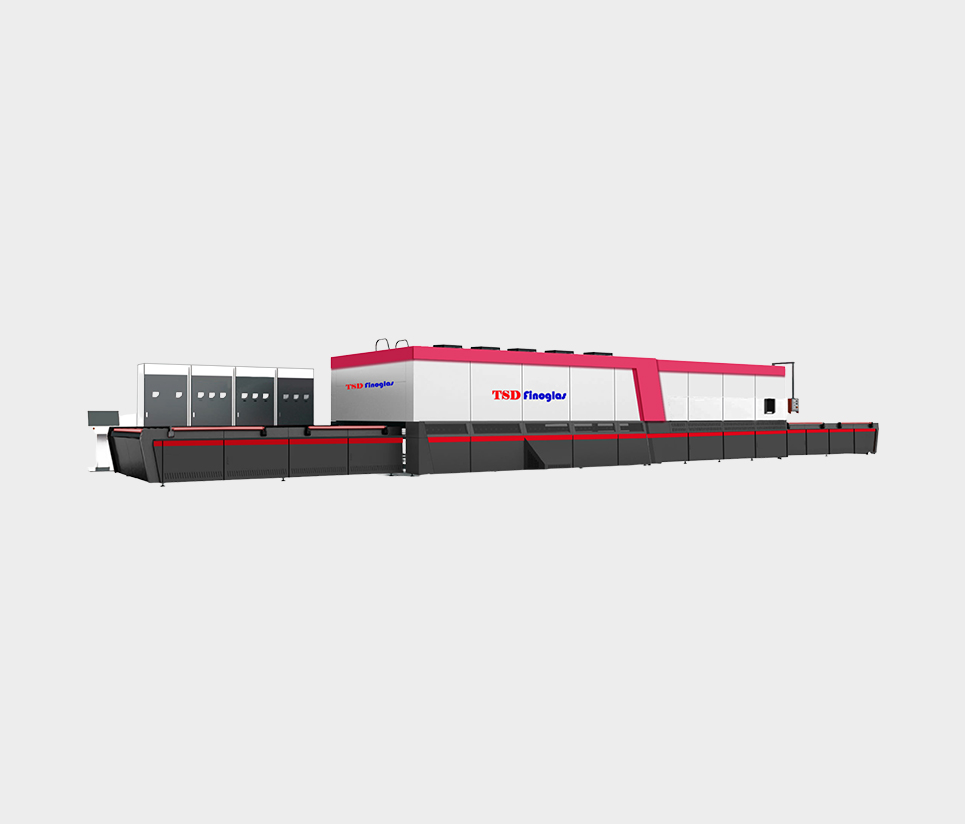
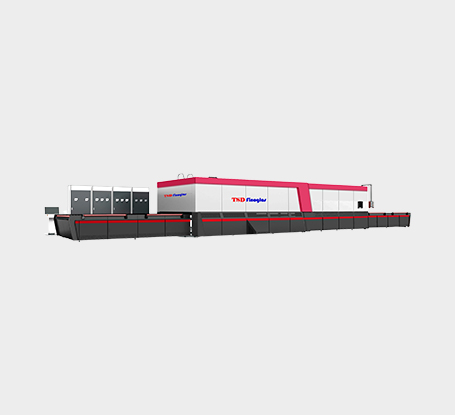
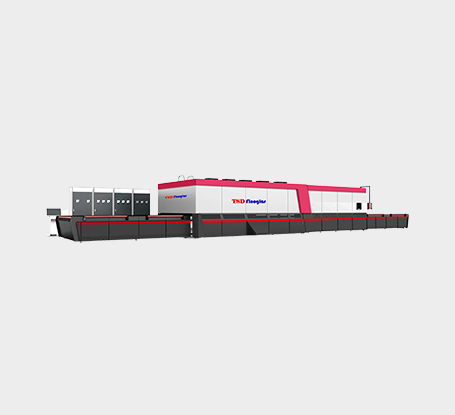
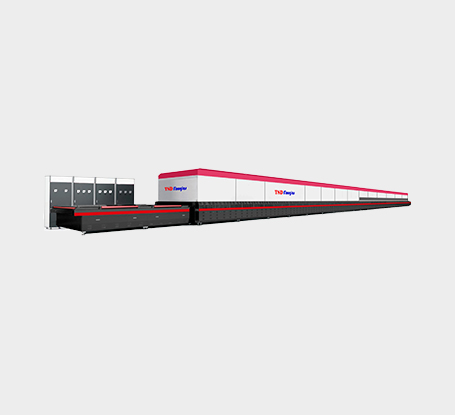
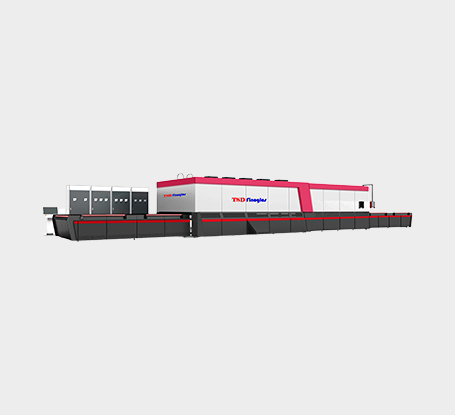
This machine is used to produce the flat tempered glass. Glass types can be tempered: clear glass, colored glass, patterned glass, tinted glass, screen printed glass (should be with the ink which can be tempered), hard low-E glass (should be with the film which can be tempered, usually E ≥ 0.1), soft low-E glass (should be with the film which can be tempered, usually E≥0.02 ), etc.
This machine is used to produce the flat tempered glass. Including:
1) Loading/unloading section
2) Heating section with force convection heating system by fan at top oven
3) Flat tempering & cooling section
4) Unloading/loading section
5) Blower system
6) Control system
7) UPS system (for option)
Brief Introduction
-1) Loading section:
Loading section is consisted of compound steel structure frame, transmission system, photo-electric switch and universal ball elevating table etc..
Drive motor of loading section is drove by inverter, transporting the fixed glass sheet to the photoelectric sensor of front door of the heating section and ready for enter the furnace.
When glass is entering the furnace, rollers in loading section are ran in high speed through motor driven by inverter, transporting the fixed glass to the heating furnace for heating. Encoder will exactly measure and record the total length of the glass. Moving distance of loaded glass sheets can be changeable through man-computer interface according to glass size.
Universal ball frame with pneumatic actuator will be manual controlled elevating, which is suitable for bigger size glass sheets loading.
-2) Heating section:
The heating section includes the roof lifting mechanism, heating system, fast cooling system,ceramic rollers, the length measuring and temperature measuring devices.
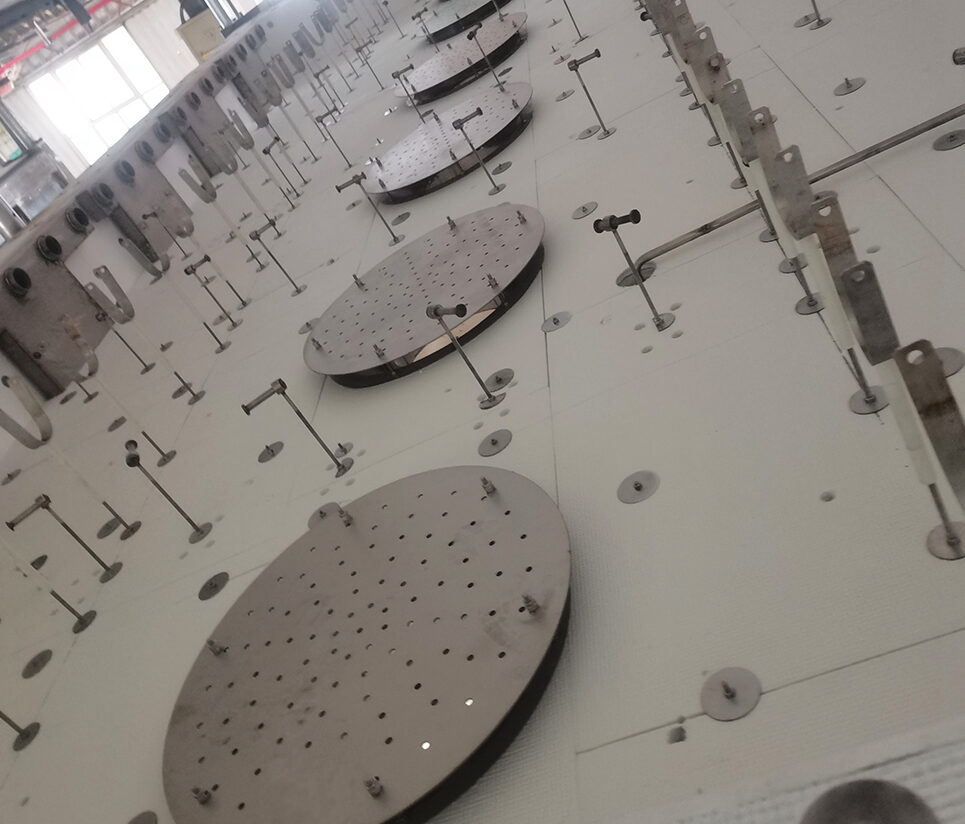
The heating furnace is divided into upper and lower parts. The upper part can freely move up and down by the roof lifting mechanism for easy maintenance. Latest heat-insulation material is chosen for heating oven body, the connection of which is also specially handled for further better heat preservation.
The fast cooling system is for fast cooling when the heating oven is needed to reduce temperature.
The heating structure is lattice type. Upper and lower parts of the furnace are heated independently in each heating zone. Upper heating area and lower heating area will be divided into several small areas according to furnace size. Each heating zone has its thermocouple forming independent control loop. The heater is good quality alloy material to service more years.
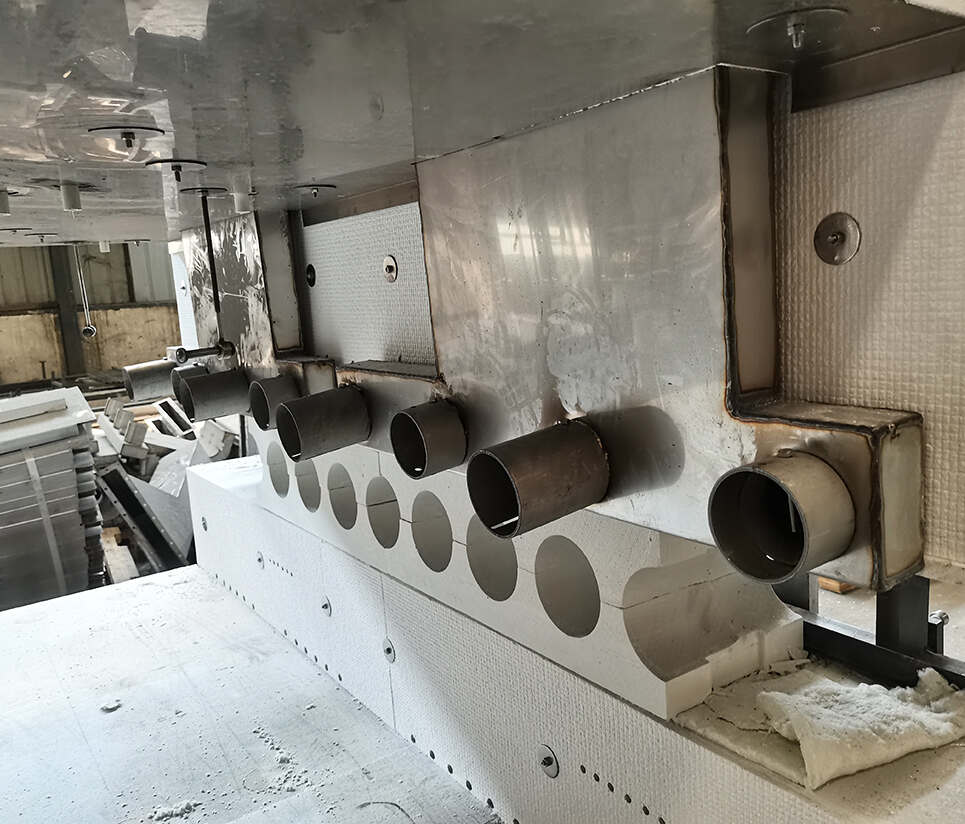
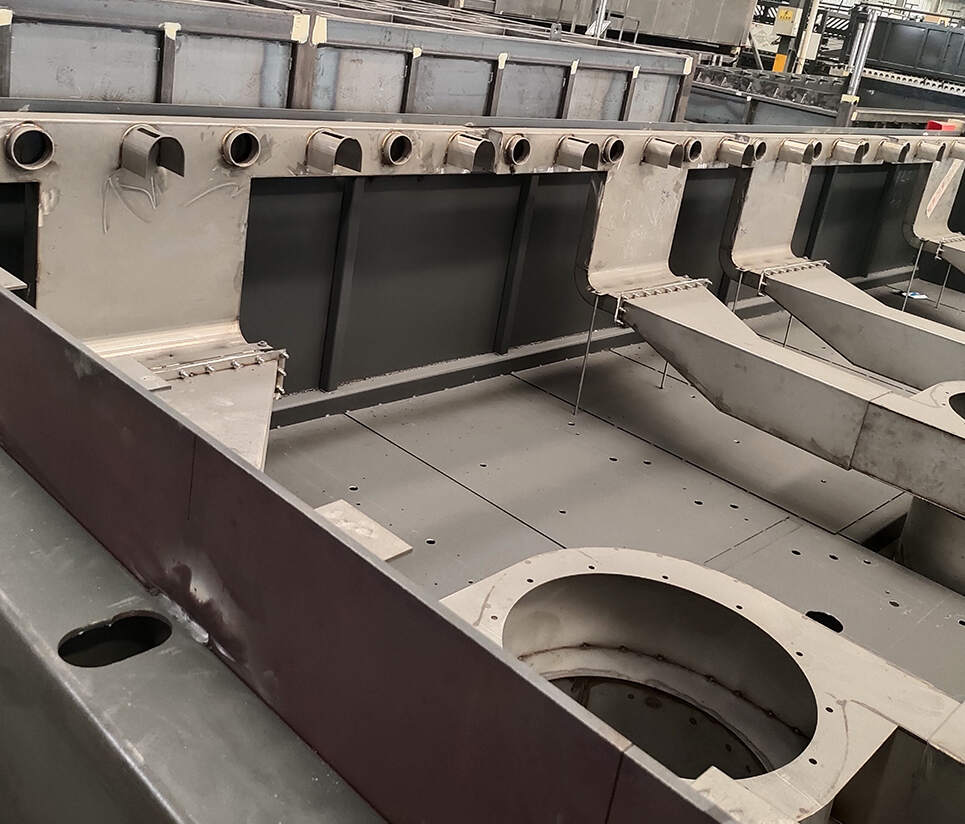
Accessorial forced convection system in heating oven is the latest development of tempering furnaces. It is composited of convection blower, air-in pipe route, air-out pipe route and etc..This system changes traditional heating method from main radiation and conduction to combined-action of radiation & conduction & convection, ensuring symmetrical heating temperature in oven, which speed up heating and well-proportioned glass endothermic reaction. It solves the problem of over-heat at glass sides and center at traditional tempering process, and greatly enhances tempered-glass surface-quality and flatness. Especially it is suitable to temper glass which absorbs heating at different speed at two sides, such as low-E glass and coated glass.
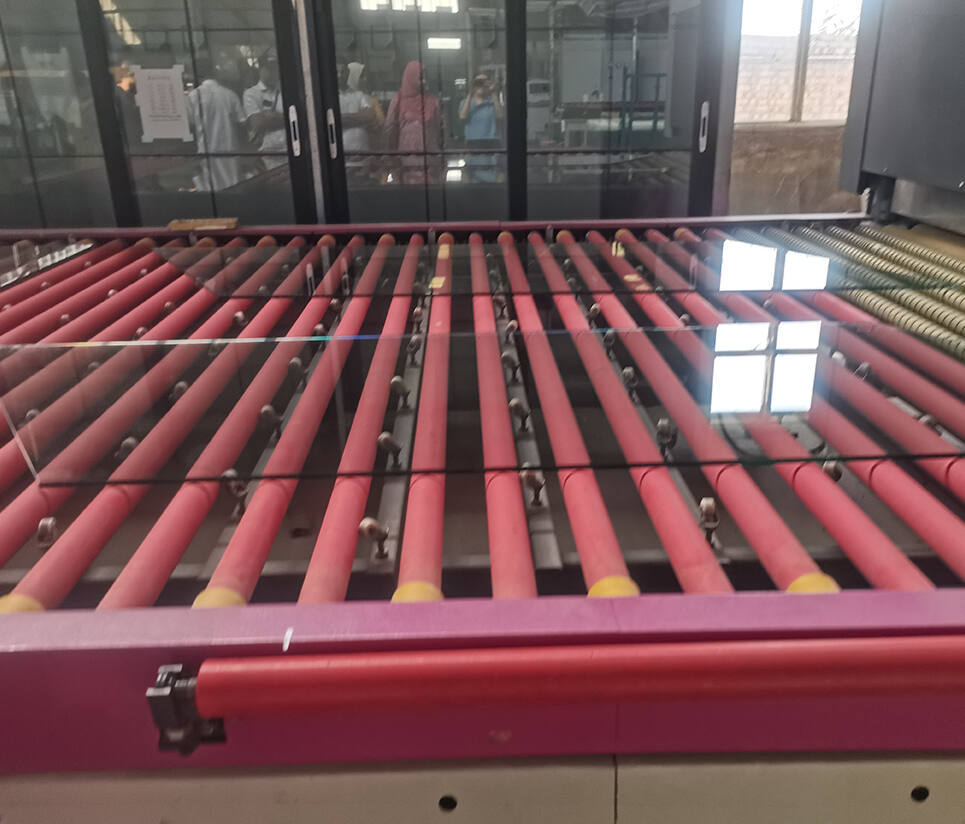
Ceramic rollers are driven by round-shape belt. Adjustable speed by inverter can ensure simultaneous and stable running.
When glass is entering into the furnace, front oven-door opens. rollers in loading section and heating section move simultaneously and transport the glass to the heating furnace. During heating in oven, glass makes reciprocating movement, which can be heated evenly.
When heating is finished, the quench section will move at same speed with the heating section conveying the glass to the tempering sections for tempering and cooling.
-3) Flat tempering and cooling section:
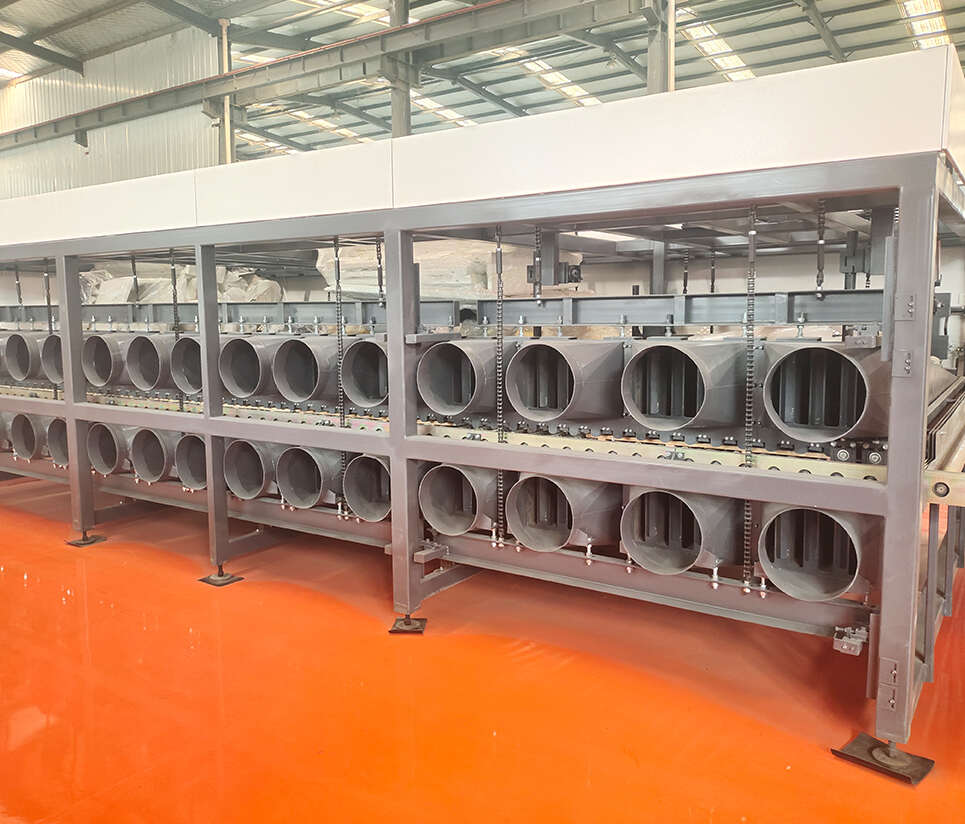
The cooling section includes steel-structure frame, transmission system, quenches, quenches open/close mechanism, upper-quench elevating frame and soft air pipes… Quenches are upper and lower two parts, which are connected separately with air distribution center.
Proximity switch of quench open/close mechanism can adjust electrically air-blowing distance between upper and lower quenches. Upper quench elevating frame will solely adjust high of upper quench, which is more convenient to adjust glass flatness during operation.
Upper and lower quenches will close automatically when heated glass is ready to exit from oven,. Rollers will run at same speed with ceramic rollers in heating oven to carry heated glass to flat tempering and cooling section. During cooling, glass acts reciprocating movement to get symmetrical cooling of glass. For different thickness glass, the computer will auto-regulate inverter of blower to supply proper air-pressure and air-quantity accordingly.
-4) Unloading section:
It’s primarily the same as the loading section. Since of manufacturability, there is equipped photo-electric switch at end part. Rollers will stop running when the glass touches photo-electric switch, and people unload glass by hands. Bigger size of glass sheets can be unloaded at universal balls elevating table trough side-rollers.
-5) Blower system
The fan system includes the blowers, inverter, air-door control unit, air distribution center, and air adjusting devices for upper quench and lower quench.
Blower is integral type structure, convenient to be installed.
Air distribution center ensures coherence of upper and lower quenches. Blower will be adjusted speed by inverter. Air volume and air pressure can be adjusted according to different production need since of different thickness glass, to get perfect tempered glass quality.
-6) Control system
The control system consists of temperature control system, transmission control system, air route control system and alarm system during urgent trouble.
It can accurately control temperature in heating oven and show work-state through industrial control computer, and also regulate process data according to process requirement. PLC program controls logic action of machine different section. In addition, we use far-terminal temperature module to change simulate-signal which is collected by temperature detector at spot to digital signal for computer collection, which greatly improves steady of temperature collection system, maximum reduces interference by heaters to temperature control system. Meanwhile, to keep temperature balance, temperature control system has two working mode for choice. One is hand-control start/stop of heating balance system, the other is auto-start/stop heating balance system by computer according to spot temperature data.


Main Technical Feature
-1) Heater arrangement
The heaters of tempering furnaces in our company is arranged by different ways since different oven size. Such arrangement makes simple heater structure, convenient installation and longer service life.
Heaters have single-point adjust-control function. Each heater has sole thermo-couple to measure temperature, and can be set temperature and power alone, which great possibly even temperature.
Heaters are from Beijing Shougang Electrics Company and service long time. Over-hung installation mode is easier to maintain. Each heater installation is independent, it will not affect others when to replace the trouble one.
The lower part is with our streamlined swing-shape radiant panel which can radiate the energy from lower heaters to oven hearth for effective heating result. There is no radiant panel in upper part, so the infra-red energy from upper heaters can radiate to upper surface of glass for fast heating absorption. Thus can reduce glass staying time in oven and improve glass surface quality, especially coated glass, which can avoid film-off phenomenon of glass surface. In addition, we add intelligent. When thicker glass comes to heating oven, operator can set power of glass entering and power gain speed.
It can set late-start heating when thicker glass comes to oven, namely, after glass finishes crisis time it start to heat, which can avoid glass breaking rate.
Reasonable radiant panels arrangement at lower part can effectively radiate energy and insulate broken glass.
-2) Heat preservation structure
Full-enclosed heating oven adopts good quality heat insulation material, which has high performance heat preservation, heat rising from 20℃-700℃ needs 4-8 hours. It is lower 10-15℃ than per hour for natural temperature-reduction. So the energy consumption is very low. At oven surface there is high-grade ceramic high-alumina plate, which is with lighter weight and high hardness and longer service life, can solve the problem of dregs-off once heat-insulation material pulverization.
-3) Convenient Maintenance
The heating oven is divided into top and bottom part, the top part could move up & down freely, which is very convenient for maintenance. The emergency cooling system on top of the furnace is used to cool down the oven quickly, which makes the maintenance more easy and convenient.
-4) Electric Control Elements:
The temperature collecting module adopts the A/D conversion module. There is one temperature-measuring control box at the side of oven, the thermocouple cables are connected into this box and connected with the temperature-measuring module, after conversion, it needs only one piece of two-core shielded wire which could transfer the digital temperature signal to the temperature control module. This design could avoid the interference to the temperature collecting from the site equipments, such as, inverters or other equipments with big power.
The host computer adopts the industrial control computer and PLC is from Siemens.
Control program
The control program is researched and developed by ourselves. Since we have the deep research on the glass tempering processes, when we make the program, we could make it give a better service for the operation process. We divided the parameters into two kinds: operator’s parameters and engineer’s parameters. Operator’s parameters refer to the ones which the operators adjust usually, engineer’s parameters refer to the ones which affects the glass position and moving speed, etc. also, there are some high-grade parameters which is set by the manufacturers and we called them as “administrator parameters”. For the “administrator parameters”, we could hand them over to the user’s administrator for the maintenance.
-5) Features:
• The operating interface is connected to the glass tempering machine closely. With the control interface, it is very convenient to monitor the running situation of each section.
• Easy parameters-adjustment interface which makes the operation easily.
• Fully independent working mode of host computer and PLC
• The temperature control module is a small computer, and there is the temperature-control program inside it. If the host computer transfer the temperature set value and power set value of each heater to this module, this small computer could control the temperature of the whole oven. At that time, even the host computer stop working or damaged, if only there is power, this kind of glass could be tempered continuously, in other words, the host computer only has the function for parameters setting and monitoring, it is out of control, which could improve the safety greatly.
• The program has the reliable stability and friendly man-machine interface, and has much warning function for abnormal situation (such as joints of encoder loose, parameter setting wrong, etc) and has warning note for maintenance man checking.
• Mass memory for parameters-saving, since the program adopts “ACCESS” abase software from Microsoft Office, the data could be deleted and called out at will..
|
Type |
Max glass size (mm) |
Min glass size (mm) |
Thickness (mm) |
Productivity (㎡/hour) |
Installed power Capacity (KVA) |
|
TSD-QTA 1825 |
1800x2500 |
150x280 |
3-19 |
81 |
315 |
|
TSD-QTA 2030 |
2000x3000 |
4-19 |
108 |
400 |
|
|
TSD-QTA 2036 |
2000x3660 |
131 |
500 |
||
|
TSD-QTA 2436 |
2440x3660 |
150x300 |
4-25 |
160 |
630 |
|
TSD-QTA 2442 |
2440x4200 |
186 |
630 |
||
|
TSD-QTA 2450 |
2440x5000 |
222 |
800 |
||
|
TSD-QTA 2460 |
2440x6000 |
266 |
1000 |
||
|
TSD-QTA 2842 |
2800x4200 |
200x350 |
5-25 |
221 |
800 |
|
TSD-QTA 2850 |
2800x5000 |
263 |
1000 |
||
|
TSD-QTA 2860 |
2800x6000 |
316 |
1000 |
||
|
TSD-QTA 3050 |
3000x5000 |
200x400 |
277 |
1000 |
|
|
TSD-QTA 3060 |
3000x6000 |
327 |
1250 |
||
|
TSD-QTA 3350 |
3300x5000 |
297 |
1000 |
||
|
TSD-QTA 3360 |
3300x6000 |
335 |
1250 |
||
|
TSD-QTA 3380 |
3300x8000 |
469 |
1600 |
Note:
1.The above data is calculated by 5mm clear glass and 100% loading rate as reference.
2. Above is general size list, others can be customized according to exact need.
3.The company keeps the rights to update data without notice.
|
Bow bending |
normal clear glass |
4~6mm 1.0% 8~19mm 0.8% |
|
Waveform bending |
normal clear glass |
4-6mm 0.2mm/300mm 8~ 19mm 0.1 5mm/300mm |
|
Air mark |
Under natural light, at an observation distance of ≥ 1000mm and an observation angle of ≥ 15 degrees, when observing glass more sheets together with a thickness of ≤ 30mm or single pieces of glass with a thickness of ≤ 19mm, with the naked eye, no air marks are visible. |
|
Fill the form and send us your message.Get in touch with TSD and find a specialized consultant for you !